Joseph Priestley, Part 8 of 11
by Bill Weston


Back to Priestley History Page
Back to UUCSV Home Page
Back to Part 7
Download a text file with the entire history


Joseph and Mary Priestley sailed from England on April 8, 1794 and, after a long and rough passage, reached New York on June 4th. They joined their sons who had preceded them and who were engaged in purchasing land in Pennsylvania where they hoped to found a settlement of English immigrants. Although Priestley was fully informed about this venture and had decided to join them in living in the settlement when it was established, he was not one of the planners and, in fact, was not overly enthusiastic about it.

During the 10 days he was in New York, he was visited by Governor Clinton and other leading citizens and several public expressions of welcome were made. However some of the local clergy used the occasion of Trinity Sunday, June 15th, to preach against Priestley's religious views. They appeared to fear his influence.

On June 18th, Priestley went on to Philadelphia where he was also honored and invited to stay. However, he was determined to press on to Northumberland to join his sons. At this time he seemed to have some idea that he would be able to live in the country, in Northumberland, and make frequent trips into the city of Philadelphia. This would have duplicated the style of life he enjoyed for a time in England when he could commute into London in a few hours. The trip to Northumberland convinced him that this was impossible. It took five days over very poor roads, climbing mountains and fording rivers, and with very primitive accommodations in the inns along the way. He describes one tavern as so bad that he and Mary elected to sleep in the wagon instead of in the rooms available.

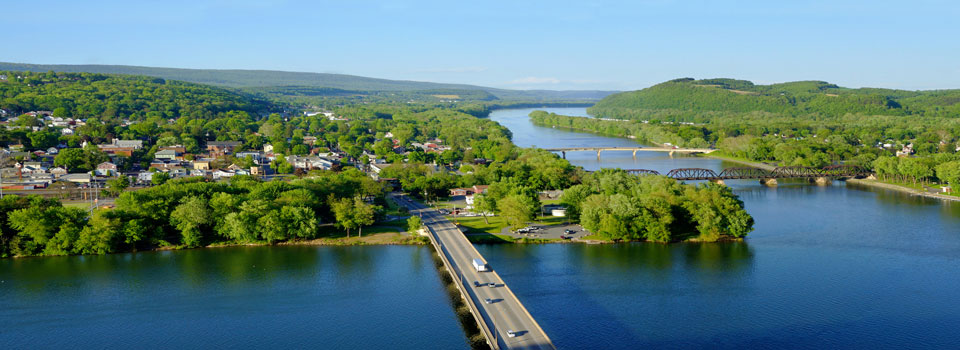
The town of Northumberland, while growing and showing some promise, was still not far advanced over the wilderness outpost it had been a few years before. There were about 100 homes clustered at the junction of the two branches of the river and Joseph and Mary lived, in the beginning, in a small house with his son, Joseph's, family.

Within a short time the scheme of a settlement was given up and Priestley wrote to his friend, John Vaughan, to find him a house in Philadelphia. However, a month later, after the house had been procured, Joseph and Mary had changed their minds and decided to stay in Northumberland. Mary, in particular, enjoyed the beauty and tranquillity of the country and never wanted to live in a city again. Her health had been poor and was worsening; she had tuberculosis and, at times, was spitting blood. Not even the offer of the chair of the chemistry department at the University of Pennsylvania could tempt them to return to the city.

By September, 1794, they had selected the site for their house and started to dry timber for its construction. It would take 4 years to complete the house; years which brought several disappointments and some major calamities.

During 1795, Joseph, Jr. was still engaged in selling some of the lands along the Loyalsock to immigrants even though the settlement scheme had been given up. The youngest son, Harry, decided to farm on some land a little distance up the river and, after a time, his brother, William, joined him.

Joseph Priestley was somewhat lost without his library and laboratory but he continued his daily routine of writing. He was, by then, in his sixties; he gave up wearing a wig and he complained about losing some of his teeth but he took daily walks and, at times, worked with his sons on the farm. Meanwhile, carpenters, who had to be imported from Philadelphia, had started building the house.

In the summer of 1795, Harry contracted a fever and, after several recurrences, in December, at the age of 18, he died.


Forward to Part 9