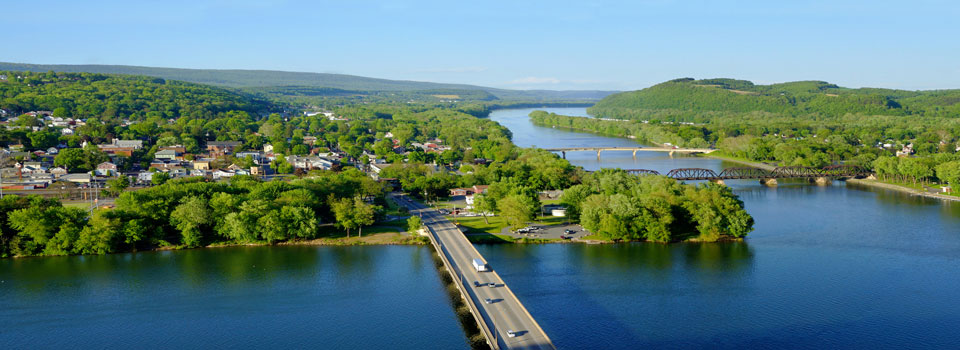
A BIT OF HISTORY JOSEPH PRIESTLEY by Bill Weston Joseph Priestley was born on March 13, 1733 in Fieldhead, near Birstall, in Yorkshire, England. To give some perspective to this date, it was a year after the birth of George Washington. Joseph was one of 6 children born to Jonas Priestley, a wool dresser. His mother died in 1739 giving birth to her 6th child in 6 years. Joseph spent much of his early childhood with his maternal grandfather and, after his mother's death, his father tried to raise him at home but, apparently couldn't manage it. When Joseph was 9 years old he was adopted by his father's sister, Mrs. Keighley. This was, probably, one of the best things that ever happened to Joseph Priestley. The Keighley's were people of substance who lived a few miles away from the Priestley home. Mr. Keighley was, in his younger days, a persecutor of Dissenters. A dissenter was anyone who belonged to a church other than the Church of England and, in those days, this included the Catholics, the Quakers, the Calvinists, the Presbyterians, etc. Mr. Keighley, hid himself in a dissenter's church in order to hear their heresies and report them to the law but, instead, he became converted to their doctrine. From then on he supported the dissenters and invited them to his house to espouse their views. It can be imagined what effect this had on the young Joseph Priestley. He heard talk around the Keighley's dinner table which had to incite his curiosity. Soon after Priestley came to live with them, Mr. Keighley died leaving his considerable property to his widow who was determined to do good with her wealth. Her house was a center of nonconformity and a resort of all the dissenting ministers in the neighborhood. Priestley says, in his memoirs: ...there was hardly a day in the week in which there was not some meeting of one part of the congregation. On one evening there was a meeting of the young men ......This I constantly attended. At my aunt's there was a monthly meeting of women who acquitted themselves in prayer as well as any men....I was permitted to attend their meetings.... At an early age, Joseph decided to study for the ministry and, toward that goal, he learned Greek and Latin and Hebrew. He was so proficient that, at age 16, he tutored ministers in the study of Hebrew so that they could read the Hebrew bible. When it appeared that he was consumptive and would have to abandon his plan to study for the ministry he taught himself French, Italian, and German so that he might engage in a commercial occupation. However, his health recovered and he enrolled in the Academy at Daventry. Joseph Priestley was clearly a brilliant scholar as a boy. He had decided he wanted to study for the ministry and, toward that end, he started his studies of Latin and Greek when he was 12 years old. When he was about 16, his health deteriorated and it seemed that he wouldn't be able to pursue that career, so he taught himself French, German, and Italian to prepare himself for a career in business. He did, in fact, translate some letters for a counting house but his health recovered and he returned to his classical studies. He also mastered Hebrew by his late teens and tutored some local ministers in that language so that they could read the Hebrew Bible. At 19, he was ready for college and Cambridge or Oxford would have been ideal for him. However, as a member of a Dissenting religion he was not allowed to enter either of them. His Aunt, Sarah Keighley, arranged for him to attend the best of the dissenting colleges, Daventry Academy. Joseph was, at that time, a devout and pious young man and still a Trinitarian. Before he went away to college, he wanted to become a member of the Calvinist Church which he and his aunt had faithfully attended. However, in order to become a member he was questioned by the church elders to see if he understood the church doctrines and he was asked to explain the doctrine of original sin. His answer, in short, was that he didn't think this doctrine was contained in the scriptures and so, being, above all, an independent thinker, he wasn't too sure that he believed in original sin. Membership was thereupon denied him and he left for Daventry without a church. He was so advanced in his studies that he skipped all of the first year and some of the second year requirements. He finished Daventry in 3 years and, in 1755, he entered the ministry at Needham Market at 20 pounds a year. He was not a success. He had an unfortunate speaking voice and a stammer and it soon became apparent that he was a believer in Arianism, a heresy that held that Jesus was not quite divine. This wasn't acceptable to many of his congregation and, after 3 years of dwindling membership, he was encouraged to go elsewhere. He applied at Sheffield but was turned down. The decision against him was prompted not so much because of his opinions or his delivery but because of his "gay and airy disposition". He was known to jump over the counter at the grocers for fun. In 1758, he did secure a church in Nantwich in Cheshire and he also started his first successful school. In a short time he had about 30 boys and 6 girls in class and some private pupils. He had long been a critic of the English school methods and curriculum and introduced many innovations. He didn't like the grammar books available so he wrote his own. He was a firm believer in the benefits of having his students compose essays in English. He bought some scientific apparatus and taught the pupils to use it and give demonstrations and do experiments for their parents. He also introduced some radical innovations in the teaching of history and invented the Chart of History to reveal the principal events in various civilizations along a time line. He taught himself to play the flute and amused himself with it all his life. He wrote in his diary (to paraphrase) that everyone should learn to play an instrument and its better if they aren't too good at it, as I am not, because then they'll be less critical more easily pleased at mediocre performances. In 1760, when Joseph Priestley was 27 years old, his prospects as a minister did not appear to be very bright. His second congregation at Nantwich was small when he took over and remained so. There were never more than 60 members and not enough children to form a Sunday School. His school prospered, however, and he seemed more suited to the field of education than the ministry. During this period he became acquainted with two families which were to affect his future life. A fellow dissenting minister was married to the sister of Josiah Wedgewood and Joseph and Josiah became good friends for life. One of his pupils was William Wilkinson, son of a very prosperous iron works owner and Joseph visited the Wilkinson home frequently. It soon became apparent, however, that his interest was less in his student, William, than it was in William's sister, Mary, who later became Mrs. Joseph Priestley. In 1761 he was offered the position of Professor of Languages at Warrington Academy so he gave up his church. The appointment to Warrington was a very important turning point in his life as he finally found himself surrounded by stimulating intellectuals and his social life was very congenial. In this environment he blossomed and some of his most interesting work, particularly in educational theory, came out of this period. He continued to be active in the ministry on a part-time basis and was ordained in 1762. Characteristically, he believed in freedom in education as he did in politics. He encouraged his students to question what they were taught and to advance their own ideas for evaluation. He introduced many innovations in teaching theory and curricula. He introduced modern history, constitutional law, economics, and political science decades and, in some cases, a century before they became accepted parts of English teaching. Among other heretical ideas he advocated compulsory education for all citizens at government expense. His career at Warrington was so illustrious that the University of Edinburgh, in 1765, conferred an LL.D. degree to honor his educational contributions. This was the first public recognition of his talents. Unfortunately, Warrington Academy did not prosper and Priestley's salary was a mere 100 pounds a year plus a house. He and Mary took in boarders to make ends meet. Finally, in 1767, his growing family made it impossible for him to continue as a teacher and he returned to full time ministry, accepting the invitation of the Mill Hill congregation at Leeds. In 1767, Joseph Priestley had to give up his professorship at Warrington Academy and he became the minister at Mill Hill Chapel in Leeds. The change was necessary because it became impossible on a professor's salary to support his growing family. His daughter, Sarah, was 4 years old and his second child was expected. His life, other than his income, while at Warrington was very enjoyable and much of that enjoyment came from his yearly trips to London where he met several of the leading intellectual and scientific leaders of his age. For example, he met Benjamin Franklin who encouraged him in his ambition to write a book about electricity. The book was completed within a year and was so impressive that he was proposed for membership in the Royal Society. His career as a scientist was launched. He welcomed the opportunity to resume his ministry as he always considered that to be his most important life's work. By this move to Mill Hill Chapel he was, in a sense, going home, as he had grown up within 6 miles of Leeds. The congregation he took over he described as "liberal, friendly and harmonious"; it had been led by a Rev. Walker who had already introduced them to anti- Trinitarian belief and who had rejected the doctrines of original sin and atonement. At Leeds Priestley clarified some of his beliefs about church organization and the role of the minister. He felt that the church should be governed by a body of elders or trustees who would be elected by vote of the congregation. The minister would have no special authority in running the church nor, in fact, in presiding at the worship service. Able lay persons in the congregation were just as well authorized to preside, he believed, and, in fact, later on, he advocated the establishment of lay-led churches. It was also while at Leeds that he became a Socinian; that is, he came to believe in the teachings of the 16th century Polish writer, Socinus, that Christ was a mere man. He later expressed the opinion that Socinians were the only body of Christians who were entitled to be called Unitarians. In the 6 years Priestley spent at Leeds he was engaged, extensively, in writing and speaking on the several theological questions which were being debated. He published a magazine called The Theological Repository and invited contributions from writers of all shades of opinion. Unfortunately, the orthodox ministers rarely contributed; their opposition to the dissenters mainly took the form of ignoring them. Priestley fought two enemies, those whom he felt were corrupt Christians and non-Christians or "unbelievers", a term Priestley also applied to the Deists. As the rational defender of historic Christianity he was often attacked from both sides. His scientific career was not abandoned while at Leeds. In fact, it was here that he first became interested in the study of gases for which he became most famous. He lived across the street from a brewery and he discovered that he could collect a gas from the fermenting brew which had an effervescent quality; it made bubbles when added to a liquid. He thought it might be useful in making sparkling wines and he suggested that it might prevent scurvy in sailors on long voyages. He had, in fact, discovered carbon dioxide and he could be considered the father of the soft drink industry. His scientific reputation had grown to the point that he accepted an offer of a position as scientific adviser on Captain Cook's second voyage. However, the offer was withdrawn due to pressure from the orthodox clergy who objected to his religious opinions. After six years at Leeds he was offered a position in the Earl of Shelbourne's household as tutor, librarian, and companion to the Earl. The salary was very attractive and his family was still growing so he, reluctantly, once again gave up his ministry. In 1773, Priestley gave up his ministry at Leeds and went to work for the Earl of Shelbourne. He received 250 pounds a year and a house in Calne as librarian and literary companion to Shelbourne and a tutor to two young boys in the household. One drawback was that he was required to live in London in the winter months while his family stayed in Calne but, otherwise, it was an ideal position. He was financially secure, he moved in social circles where he was able to meet many important persons, his duties were light and agreeable to him, and, best of all, he had more time than ever before to do what he liked. Although Priestley had started his experiments with gases in Leeds, his most important work dates from his time with Shelbourne when he had the money, equipment, and time for serious scientific experimentation and writing. Indeed, the first of his six volumes on Air, published in 1774, is dedicated to Lord Shelbourne. As noted by Anne Holt in her biography, he could "never resist the temptation of using his prefaces for these scientific books as gilding for a theological pill with which to dose his unbelieving scientific readers." Of course, as he often stated that he did science only in order to demonstrate God's wonders to man this is not too surprising. A sample of Priestley's approach in all his endeavors can be seen in his first book on electricity. He was unable to find anyone to draw the illustrations of the instruments he described so he decided to do it himself. He looked for a book explaining perspective and, not finding a suitable one, he wrote one himself. This investigation into how we see things undoubtedly led him into his work which resulted in his second scientific study on Vision, Light, and Colors. In all his accounts of his experiments Priestley never hesitated to describe the complete experience. He would recount not only his successes but would describe in detail his mistakes, false conclusions, and dead ends. One amusing illustration of this was his experiment with nitric oxide which he thought might work as a food preservative. He impregnated some meat with nitric oxide and, six months later, tried to eat it. He found it to be horrible. His reputation as a scientist might very well have been greater if he had reported only his triumphs. In 1774 Priestley accompanied Lord Shelbourne on a tour of the continent. It was the only time Priestley ever crossed the channel. He made the acquaintance of many of the leading philosophers and scientists including the French chemist Lavoisier. In London he was able to visit his many good friends and benefactors and he spent much time with Benjamin Franklin. They attended meetings of the Royal Society together and became very close. When, finally, Franklin had to return to America because of the worsening relations between England and the colony, he spent his last day entirely with Joseph Priestley. They were never to meet again but did manage to correspond even during the war. During this time, Priestley refrained from any political writing that might embarrass his employer. Priestley sympathized with the colonists case against the king and, in a letter to Shelbourne in 1778, encouraged him to use his influence in the government to recognize their independence. Shelbourne, however, continued to resist independence but tried to limit the war until reconciliation could be worked out. Relations between the two men grew increasingly difficult although cordial. Shelbourne was increasingly embarrassed by Priestley's unorthodox religious views and his support of the American revolution. There was also an unfounded charge that Shelbourne was corresponding with the enemy based on the fact that Priestley maintained correspondence with Benjamin Franklin. For these and other reasons it was decided that they should separate and they did so, in 1780. Priestley continued to receive 150 pounds from Lord Shelbourne for the rest of his life. After he left the employ of Lord Shelbourne, Joseph Priestley moved to Birmingham partly at the suggestion of his brother-in-law, John Wilkinson, who desired his sister to be closer. Priestley also had friends in Birmingham and there was a scientific society there which attracted him. Shortly after moving there he was asked to become the minister of New Meeting, a congregation which had the reputation of being the most liberal in England. Joseph Priestley's most important scientific work was done while he was employed by the Earl of Shelbourne. His time at Birmingham was marked by the production of his most important works in theology. In 1782 he published History of the Corruptions of Christianity a work that so offended the orthodox that it was officially burnt in Holland. In England he was attacked by several members of the orthodox clergy. One of his most vocal critics was Samuel Horsley, Arch-deacon of St. Albans who was so successful in his attacks on Priestley that he was made a Bishop. In fact, during this period it seemed that if you wanted to get ahead in the Church of England you had to be more of a Priestley-basher than anyone else. Priestley published a succession of controversial religious papers. He said that, until the Council of Nicea, where the doctrine of the Trinity was promulgated, the common people thought of Christ as a man and were, therefore, Unitarians. He studied extensively in preparing his books and stated that his search was only for the truth; if his investigations had proved him wrong he would have been happy to give up his beliefs just as he would give up a scientific theory if experiments proved it wrong. While at Birmingham he revived The Theological Repository and published another three volumes of controversial views. Priestley wrote extensively on philosophical and metaphysical subjects and engaged most of the leading thinkers of England in dialogue. Probably the only time he agreed with the orthodox was on the subject of the abolition of the slave trade. While in Birmingham, Priestley became a member of the Lunar Society. This was an informal group that met monthly when the moon was full so that there would be light to drive home by. Naturally they were called, and called themselves, lunatics. The members were successful manufacturers and professional men who shared an interest in stimulating discussions on philosophy and science and almost any subject that was interesting. The participants included James Watt, Matthew Boulton, Dr. Darwin, and others. In addition to the lunatics, Priestley's circle of friends included Josiah Wedgewood and the Wilkinsons. He was also a member of an international community of scientists who visited and wrote regularly. All in all, his life at Birmingham from 1780 to 1791 was full and happy except for the growing animosity of the orthodox religious leaders. This animosity reached a peak in 1791 and, coupled with the fever-pitch emotions throughout England engendered by the American and French revolutions, resulted in the Birmingham riots. Joseph Priestley never fully recovered from the damage done to him at this time and the last 13 years of his life were pretty much all downhill. In July 1791, a mob went on a rampage of destruction in the city of Birmingham and destroyed several houses and churches. It is usually referred to as the Birmingham Riot but a careful study of the evidence over the years has convinced many writers that the events were more carefully organized and orchestrated than would have been true of a band of drunken rioters. All the victims were members of the dissenting religions and supporters of the French revolution with particular emphasis being paid to Joseph Priestley. His house, church, library, and scientific apparatus were all destroyed and he fled for his life to London just ahead of the mob. Much evidence has been presented that the "riot" was planned and instigated by the clergy of the Church of England with the active support and collaboration of the magistrates. It may well be that events got out of hand and the planners never intended as much damage as was done. However, the guilt of the authorities was sufficient that the City of Birmingham agreed to monetary restitution to the victims. Priestley claimed over 4,000 pounds for his loss. Life for Joseph and Mary was a shambles after the riot. The family was dispersed--.Joseph, Jr. in Manchester, Sally at Heath, Harry at Bristol, and William in France. For a time they thought they might be able to return to Birmingham but were advised not to do so. Feeling still ran high against him--the press and the Anglican pulpits continued their attacks; he was avoided by members of the Royal Society and other friends; shopkeepers, workmen, and servants shunned the Priestleys and their house. The news from France, where the revolution was becoming more bloody, increased the English hatred of its supporters. Although he tried, with the help of the Wilkinsons and other friends, to rebuild his library and laboratory and get back to work, he was unable to do so. He was particularly distressed by the fact that, because of his reputation, his sons were unable to find any suitable employment. They decided to go to America with some friends and purchase land there with the hope of founding a colony of English emigrants. They sailed in August 1793. Whatever lingering doubts Priestley might have had about leaving England were soon removed by the harsher measures employed against dissenters and reformers. Friends were being deported for nothing more than criticizing the government and he decided it was only a matter of time before they focused on him. For a time he thought of going to France, where he had been offered an estate but eventually decided to join his sons in America. By this time he finally received a settlement of his claim from the City of Birmingham of a little over 3,000 pounds and booked passage. He preached for the last time in England at Hackney and voiced his sentiments: "I do not pretend to leave this country, where I have lived so long and so happily, without regret; but I consider it as necessary and I hope the same good providence that has attended me hitherto will attend me still. When the time for reflection shall come, my countrymen, I am confident, will do me justice." Joseph and Mary Priestley sailed from England on April 8, 1794 and, after a long and rough passage, reached New York on June 4th. They joined their sons who had preceded them and who were engaged in purchasing land in Pennsylvania where they hoped to found a settlement of English immigrants. Although Priestley was fully informed about this venture and had decided to join them in living in the settlement when it was established, he was not one of the planners and, in fact, was not overly enthusiastic about it. During the 10 days he was in New York, he was visited by Governor Clinton and other leading citizens and several public expressions of welcome were made. However some of the local clergy used the occasion of Trinity Sunday, June 15th, to preach against Priestley's religious views. They appeared to fear his influence. On June 18th, Priestley went on to Philadelphia where he was also honored and invited to stay. However, he was determined to press on to Northumberland to join his sons. At this time he seemed to have some idea that he would be able to live in the country, in Northumberland, and make frequent trips into the city of Philadelphia. This would have duplicated the style of life he enjoyed for a time in England when he could commute into London in a few hours. The trip to Northumberland convinced him that this was impossible. It took five days over very poor roads, climbing mountains and fording rivers, and with very primitive accommodations in the inns along the way. He describes one tavern as so bad that he and Mary elected to sleep in the wagon instead of in the rooms available. The town of Northumberland, while growing and showing some promise, was still not far advanced over the wilderness outpost it had been a few years before. There were about 100 homes clustered at the junction of the two branches of the river and Joseph and Mary lived, in the beginning, in a small house with his son, Joseph's, family. Within a short time the scheme of a settlement was given up and Priestley wrote to his friend, John Vaughan, to find him a house in Philadelphia. However, a month later, after the house had been procured, Joseph and Mary had changed their minds and decided to stay in Northumberland. Mary, in particular, enjoyed the beauty and tranquillity of the country and never wanted to live in a city again. Her health had been poor and was worsening; she had tuberculosis and, at times, was spitting blood. Not even the offer of the chair of the chemistry department at the University of Pennsylvania could tempt them to return to the city. By September, 1794, they had selected the site for their house and started to dry timber for its construction. It would take 4 years to complete the house; years which brought several disappointments and some major calamities. During 1795, Joseph, Jr. was still engaged in selling some of the lands along the Loyalsock to immigrants even though the settlement scheme had been given up. The youngest son, Harry, decided to farm on some land a little distance up the river and, after a time, his brother, William, joined him. Joseph Priestley was somewhat lost without his library and laboratory but he continued his daily routine of writing. He was, by then, in his sixties; he gave up wearing a wig and he complained about losing some of his teeth but he took daily walks and, at times, worked with his sons on the farm. Meanwhile, carpenters, who had to be imported from Philadelphia, had started building the house. In the summer of 1795, Harry contracted a fever and, after several recurrences, in December, at the age of 18, he died. In February 1796, Joseph Priestley made the arduous trip from Northumberland to Philadelphia to set up a Unitarian congregation. Mary stayed in Northumberland due to her poor state of health, both physical and mental. For a period of three months after the death of their son, Harry, she was confined to her room. She had recovered, sufficiently, so that Joseph felt he could leave her in the care of his daughter-in-law, Margaret, William's wife. Margaret (Foulke) was the daughter of a local farmer. It was not a marriage that Joseph Priestley approved of but this was just another in a series of acts by William that caused distress to his father. While in Philadelphia, Priestley delivered a series of lectures in the only church made available to him, the Universalist church of Elhanan Winchester. The lectures were well-attended and the audience included Vice-President Adams and several members of Congress. Priestley also managed to have a very pleasant tea with President Washington. As a result of his activities while in Philadelphia, a Unitarian congregation was established in June and he was asked to be the minister. He declined once again to accept a post in Philadelphia. He returned to Northumberland in May 1796 to find Mary's health not much improved. She tried to keep busy with her ideas for the house but she was easily fatigued. She was never to enjoy the house which in large measure she had designed because, in September, she died. She was buried in the Quaker cemetery next to Harry. Joseph Priestley wrote to Wilkinson of his loss and stated, "I feel quite unhinged and incapable of the exertion I used to make." He also learned some distressing news about his daughter, Sarah, who had married William Finch and remained in England. Finch had failed in business and was hard-pressed for money. Joseph was unable to help the Finches as he, himself, was very concerned about finances. His house would cost more than double the original estimate, his investments in France paid nothing, and the Wilkinson's who had advanced money to him for years suddenly presented a demand for repayment of over 56,000 pounds. This turned out to be a misunderstanding but it caused him some anxious months. In the winter of 1797, he made his second trip to Philadelphia where he found the Unitarian Society flourishing. He was offered the presidency of the Philosophical Society but declined in favor of Jefferson. He called on the out-going president Washington and was invited to visit at Mt. Vernon and he had several visits with Vice-President elect Jefferson. When he returned to Northumberland the laboratory wing of his new house was finished and he was able to work in it while the carpenters continued on the main house. He continued to live with his son, Joseph, in a house nearby and had already determined that his son's family would occupy the new house with him when it was finished. In June he published a pamphlet entitled The Doctrine of Phlogiston Established, which was the last scientific paper he would publish. The title was ironic in that, by this time, the entire scientific community had given up the Phlogiston theory.. In March 1797, John Adams took office as President of the United States. Although Adams had been a friend and admirer of Priestley before he took office, and would be so again, years later, he found it politically expedient to distance himself from Priestley during his term of office. It was a time of worsening relations with France and, once again, Priestley came under attack because of his support of France. In particular, another ex-patriated Englishman, William Cobbett, writing under the name of Peter Porcupine, reviled Priestley as the enemy of religion, law, and order. It was alleged that Priestley was the head of a secret group that desired the overthrow of the English government. Porcupine attacked not only Priestley but, among others, Franklin, Rush, Price, and Talleyrand. His attacks continued until 1799 when he lost a libel suit to Rush and was forced to leave the country. In July 1798, the Alien and Sedition acts were passed by congress which, in effect, abrogated free speech and made it a federal offense to criticize the government. These acts were to have ominous implications for Priestley and for his friend, Thomas Cooper. Cooper had become a naturalized American citizen so that, as a result of his speeches and publication of articles critical of President Adams, he was fined and imprisoned. He had composed the critical articles while living in Priestley's house and it was rumored that Priestley might have written them or encouraged them but this was not the case. In any case, Priestley had never given up his English citizenship so, under the Aliens Act, he could have been deported and, in fact, Secretary of State Pickering proposed to Adams that they do so. Fortunately, Adams decided to spare his former friend. In 1799 he published his Letters to the Inhabitants of Northumberland in which he gave an account of his religious and political principles and defended himself against the spurious charges of Peter Porcupine and others. Finally, in 1800, Thomas Jefferson became President and Priestley wrote to a friend, "To me the administration of Mr. Jefferson is the cause of peculiar satisfaction, as I now, for the first time in my life (and I shall soon enter my 70th year) find myself in any degree of favour with the government of this country in which I have lived, and I hope I shall die in the same pleasing situation." In April 1800, however, there was another blow to his happiness, a family scandal that was one of the bitterest experiences of his life. His son, William, was accused by an anonymous correspondent in a Reading newspaper of having attempted, while Joseph, Jr. was in Europe, to poison his father and the rest of the household by adding arsenic to the meal chest. William and his family had moved to Middle Paxton six days before the alleged incident. William denied it in a letter to the paper and sent them a letter from his father which stated, "I examined what remained of the flour and cannot say that I found any appearance of arsenic in it....... Since, therefore, no real mischief has been done and it cannot be proven that any was intended, I shall make no further enquiry into the business. I am. as ever, your affectionate father.... " William was heavily in debt and had left to try to make good elsewhere. Priestley had undertaken to pay his debts, a total of 1300 pounds, and stated in a letter to Wilkinson "I must not wholly desert him and, indeed, I feel more compassion than resentment on his account. He is gone to seek a settlement in the Western Territory (Louisiana) and I do not expect or wish to see him any more; but I shall continue to write to him and give him my best advice" In 1801, Joseph Priestley made his third visit to Philadelphia and it was almost the end of him. He contracted pleurisy and fever and was so ill that friends thought he might not recover. He was treated by Dr. Rush who, as usual, bled him often and consequently delayed his recovery. The visit was a disappointment in another respect in that he found the Unitarian Society he had helped to found was pretty well broken up. Many of the most influential members had died in the latest yellow fever epidemic and interest had waned. One bright spot was that, in March, Jefferson assumed the Presidency and, at that time, he wrote to the invalid: "Yours is one of the few lives precious to mankind, for the continuance of which every thinking man is solicitous. .....It is with heartfelt satisfaction that, in the first moments of my public action, I can hail you with welcome to our land, tender to you the homage of its respect and esteem, cover you under the protection of those laws which were made for the wise and the good like you..........science and honesty are replaced on their high ground and you, my dear Sir, as their great apostle, are on its pinnacle." This message helped Priestley to recover and he returned to Northumberland and resumed his scientific and literary work. Sometime afterwards he wrote, in a letter to a friend: "To me the administration of Mr. Jefferson is the cause of peculiar satisfaction, as I now, for the first time in my life find myself in any degree of favour with the government of this country...and I hope I shall die in the same pleasing situation." He was pleased to find that a whole new generation of men-- -men like Dalton and Davy and others---- were making great strides in scientific discoveries. Priestley continued his experiments. He became interested in the new Voltaic pile and, in 1803, he experimented with algae to disprove Erasmus Darwin's theory of spontaneous generation. His health never fully recovered from the effects of the fever, however, and he decided to devote most of the time remaining to him to the completion of his theological works, particularly his General History of the Christian Church. His son, Joseph Junior describes his health as a general weakness, constant indigestion, and a progressively severe difficulty in swallowing. Toward the end he subsisted entirely on liquids and puddings. He had lost some of his hearing and, in 1802, ordered an ear trumpet. In 1803 he was forced to use crutches for a time as a result of a severe injury to his hip from a fall. In 1803 he made his last visit to Philadelphia but he did so reluctantly and only because his son and daughter-in-law were afraid to leave him behind. He preached to the Unitarian Society and the American Philosophical Society gave him a testimonial dinner.It was a short visit and, upon his return to Northumberland, he was finally forced to move into his library on the first floor to avoid the climb up the stairs. He continued to rise daily and shave and make his own fire and perform most of the daily chores until the very last few days. In January, 1804 his symptoms worsened and, on February 6, 1804, after dictating some corrections to a manuscript to his son, Joseph, Jr., he died, at age 70, quite peacefully in his bed in his library.